
Ko Samui is not a tiny beach escape: coconut plantations cover 46.7% of the main island. That single fact changes how you read the map.
The beaches sell the dream. The interior is working land, with durian plots, hills, waterfalls, and two main forest reserve pockets named by the municipality.
Scale changes the trip. Its municipal area covers 252 sq km and includes 18 surrounding islands, so your first choice isn’t just which beach. It’s how you want the trip to feel.
By 2024, Samui International Airport had climbed above its 2019 arrival level, and luxury hotels had clustered hard around Chaweng, Bo Phut, and Lamai. In my honest opinion, that’s why the island rewards planning more than daydreaming. The best trip pairs sand and spa time with the inland reality most visitors never picture.
Add one smart offshore day. The whole place makes sharper sense.
Where the island sits in the Gulf of Thailand
Ko Samui is Thailand’s second-largest island after Phuket. It sits on the quieter Gulf side off the east coast of the Kra Isthmus rather than in the Andaman spotlight.
That position matters. It puts the island closer in feel to Surat Thani and the lower Gulf than to Phuket or Krabi, even though first-time visitors often group them together in their heads.
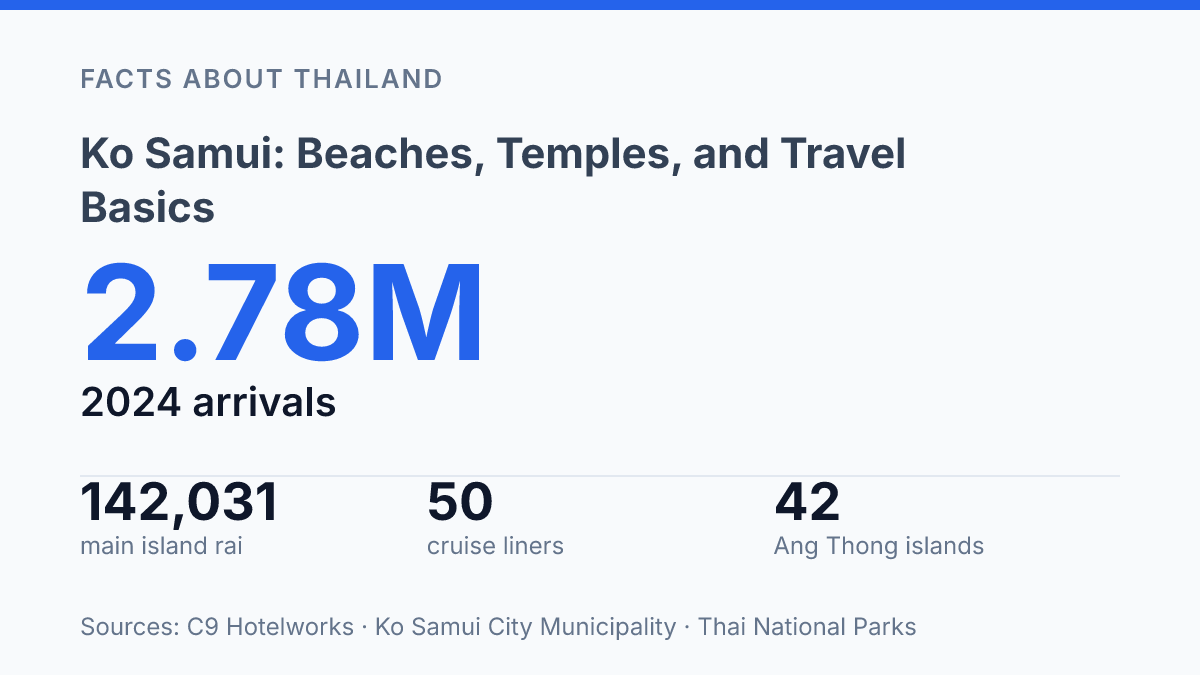
Scale changes the trip more than the map suggests. The municipal area covers 252 sq km, with the main island making up 227 sq km, or 142,031 rai, and 18 surrounding islands included in the municipality, according to the Ko Samui City Municipality, 2025/2026 accessed page. That makes Samui a real island district, not a tiny resort outcrop you can understand in one glance.
The island can look remote when you zoom out. But once you arrive, it’s built for easy movement. Flights, ferries, taxis, hotel transfers, and loop-style roads make the geography feel practical rather than isolated. In my view, that contrast is the key to understanding Samui: it gives you island separation without making every plan feel like logistics work.
One landmark shows this neatly. Wat Phra Yai sits on a tiny islet linked to the main island by a causeway. The shrine feels set apart even though reaching it is simple. Its golden Big Buddha rises 12m, high enough to work as both a religious marker and a visual anchor near the island’s northeastern edge.
That’s the pattern here. Samui is separate, but not difficult. It has enough size to hold towns, temples, roads, ports, and airport access.
It still keeps the mental clarity of an island: water around you, short hops between places. A clear sense of arrival.
Beaches, coconut groves, and the island’s inland contrast
Nearly half the main island is still planted with coconuts. The palms aren’t just beach decoration.
According to Ko Samui City Municipality, coconut plantations cover 66,306 rai, or about 46.7% of the main island’s land area. That changes how you read the coast: Ko Samui is known for palm-fringed beaches and coconut groves, especially along its more developed shorelines.
The postcard version is real, but it’s only the outer rim. Move inland and the island rises fast, with roads bending through plantations, ridges, and waterfall country. dense, mountainous rainforest covers the interior, giving the island a much rougher feel than the resort image suggests.
That contrast matters more than another beach name. Thailand tourism often sells the beach side first. The inland terrain is the part that changes the trip most. You arrive expecting soft sand and easy water, then discover a hillier island with sharper edges.
There’s a catch, though. The interior isn’t untouched wilderness from coast to peak. The municipality identifies two major forest reserve areas around Hin Lad Waterfall and Na Muang Waterfall Park, while agriculture remains the dominant land use.
That mix is what makes the island work. Coconut groves soften the lower ground. Steep green slopes give the middle distance weight. In my honest opinion, the best version of a visit comes when you stop treating the interior as background and let it interrupt the beach rhythm.
Why luxury resorts and spas cluster here
In 2024, 34% of Samui’s registered hotels were classed as luxury resorts by C9 Hotelworks, so high-end travel here isn’t a decorative add-on. It shapes the island’s first impression for many visitors. Private pools, screened villas, beach-facing restaurants, and controlled arrival experiences all feed the same promise: you can feel remote without giving up comfort.
That promise works especially well for travelers who want privacy and direct beach access. A resort can turn a short strip of sand into a self-contained holiday, with breakfast, massage, cocktails, and sunset all within a few minutes’ walk. In my humble opinion, this is why Samui feels more polished than many Thai islands without losing its softness entirely.
The wellness side matters just as much. posh spas are part of the island’s appeal, not just a rainy-day extra tacked onto a hotel brochure. Treatments borrow from Thai massage traditions. The setting changes the experience: sea-view rooms, herbal steam, quiet courtyards, and long post-treatment pauses that make doing nothing feel planned.
The concentration also follows geography. the east coast tends to feel more polished than the rougher inland roads and hillside pockets behind it, with Chaweng holding 30% of the island’s accommodation supply, followed by Bo Phut at 20% and Lamai at 14%, according to C9 Hotelworks. That clustering makes services easier to find. It also makes the island feel more curated than it really is.
But the glossy image hides a sharper contrast. Step beyond the resort gates and you hit family shops, work trucks, school traffic, roadside grills, construction noise, and steep lanes that don’t match the brochure version. That gap isn’t a flaw.
It’s the real island pressing up against the holiday version. The best visits leave room for both.
What to pair with a first visit
The island looks easy to read from a sunbed. The best first visit comes from contrast, not from hunting one flawless strip of sand.
Pair a beach day with Wat Phra Yai first. It gives the trip a clear landmark without turning the day into a checklist.
Don’t blur the island’s natural settings into one vague “tropical” experience. coconut groves, beaches, and rainforest work better as three separate moods. The coast gives you soft light and easy water. The groves show the cultivated side of the island.
The inland green areas bring shade, slope. A cooler pause.
That mix matters more than squeezing in every famous stop. A first visit feels stronger when you build in contrast: one polished coastal base, one temple stop, one inland outing, and enough open time to let the island breathe. In my view, trying to “complete” Samui usually makes the trip worse, not better.
For a bigger nature pairing, Mu Ko Ang Thong National Park is the cleanest add-on if the season and sea conditions line up. Thai National Parks describes it as an archipelago of 42 islands covering 102 sq km, about 30 km from Samui.
That scale changes the rhythm of a trip. You leave resort comfort for limestone islands, viewpoints, and boat time… but you also accept less control over weather and timing.
Ko Samui works best for travelers who want both soft coastal scenery and a polished stay, not a purely rustic island trip. That’s the tradeoff. You get comfort, restaurants, spas, and beaches with easy appeal.
You shouldn’t expect the whole place to feel remote or untouched. Plan for that honestly and the island makes far more sense.
Plan for the island you’ll actually meet
The smartest next step isn’t booking the prettiest room first. Choose your base by friction: Chaweng for access, Bo Phut for a calmer dining rhythm, Lamai when you want room to breathe without feeling cut off.
Then protect one day for Mu Ko Ang Thong National Park. Its 42 islands sit about 30 km away. The trip still depends on weather, boat timing.
The usual closure from 1 November to 15 December. That’s the tradeoff with island travel. The best days look effortless only after someone planned them.
In my humble opinion, Samui works best when you stop treating it like a single beach and start treating it like a small region. The reward isn’t more movement. It’s fewer wasted choices.
Frequently Asked Questions
Q: What is Ko Samui best known for?
A: Ko Samui is known for palm-fringed beaches, coconut groves, and dense, mountainous rainforest. It also has a polished side, with luxury resorts and high-end spas. In my view, that’s the mix that makes it more interesting than a plain beach stop.
Q: Where is Ko Samui located in Thailand?
A: Ko Samui sits in the Gulf of Thailand, off the east coast of the Kra Isthmus. It’s Thailand’s second largest island. It has enough size to feel varied without becoming hard to handle. That balance matters if you want beaches and quieter interior areas in one trip.
Q: How do you get to the Big Buddha temple on Ko Samui?
A: The Big Buddha is at Wat Phra Yai Temple on a tiny island linked to Ko Samui by a causeway. You don’t need a boat for that part, which surprises some first-time visitors. The site is easy to reach. It still feels distinct from the mainland island roads.
Q: Is Ko Samui better for beach holidays or sightseeing?
A: It does both well, but not in the same way. The beaches are the main draw. The temple stops and rainforest give you a break from the sand. If you like variety, that’s the appeal.
Q: How big is the Big Buddha statue in Ko Samui?
A: The Big Buddha at Wat Phra Yai is 12m tall. That size makes it hard to miss, even from a distance. It gives the temple real visual weight. In my honest opinion, it’s one of the island’s clearest landmarks, not just another photo stop.